All right. So after SO many interviews, calls, schedule conflicts, rejections ('cause of dudes with more experience) and so forth, I got into Allied Universal Security Services on March 9th the day before my 24th birthday.
Day One; Orientation, finding the retirement home so I'd know how to get there on time, then stopping at Dunkin Donuts while I was still early. I remember sitting at a booth table watching Camp X-Ray on my phone with a cup of black coffee, and then driving back to where I was so I could park and get inside. And it was very cold, so once I had my uniform and badge on I needed my nylon bomber jacket.
Yeah. One uniform shirt, and no black pants. No spares. Maybe they didn't have anything else in my size or something, but at the time it was about the dumbest thing I'd seen in the work force.
For some reason at orientation I'd been given ONE white long-sleeve shirt, badge and jacket. My brown hiking boots sufficed till I could at some point get a pair of black ones, and thankfully I'd worn black pants to orientation. So at least I didn't look like some kid the guards plucked off the street.
Once I'd emerged from a stall with my uniform on, I saw an officer in the bathroom mirror. I definitely felt older, like taking another step on the career ladder so to speak.
Since it was my first day it was mostly spent riding around with this one officer showing me around the place doing security tours; on foot and in their pickup truck. On foot we'd go inside a building and hit a few buttons on each floor (in a closet, stairwell, electrical room, etc.) with this small metal wand. I don't know how it works but it pretty much verified that you checked out that area.
Now, my shift was from 4pm to midnight (1600 - 0000). Security guards/officers don't really get meal breaks. You just eat and drink when you can, so I brought whatever I could in a grocery bag. Half the shift would involve checking people in through the gate while some officers did site tours. After those four hours we'd switch positions and check out the buildings that hadn't been secured already. I always liked being on patrol the best. Gate duty was hectic so it was better from 8 to midnight.
I said to myself I day one "this is my life now," that this was my first full-time job and I planned to keep it for as long as possible. I finally had a job where I was a protector in a few ways, like responding to emergencies while on tours and such.
Friday, July 27, 2018
Wednesday, April 12, 2017
TRIBE OF CATS
One of various ways to cope with anxiety; writing fantasy stories where I can play by my own rules! Especially when they're only a few chapters or so (each), not too long where I don't have to have a huge single-plot story arc.
I'm calling it TRIBE OF CATS (formerly The Mountain Leopard, until I decided to expand the world and characters). The way I like to approach it is "Zootopia meets LOST." Why? Because as I delve deeper into it, I'm getting to know my characters who all have their own issues, inner demons, things they struggle with, have to adapt to, and so forth. With so many types of wild cats, so many ideas... I just decided "why not use them all?"
- a snow leopard learning to a be a prophet
- a pair of tigers working as Feline guardsmen
- a panther wanting to put his past as a bandit behind
- a saber-tooth cat struggling with depression
- a leopard who dreams of being a great inventor
- a brawn-over-brain lion who has to learn to use his brain over brawn
- a lynx looking for adventure
(What I got so far anyway)
*** For example the panther Malorn (as depicted above with the bow and arrow) is adapted from an iconic character I created in high school; I decided to bring him here as a panther, since that particular story had hit a dead end, and I loved writing about him back then. Didn't wanna just leave him in the back of a box, know what I mean? ***
I love being able to pick out a single quality and then expand on it; a lot of them are things that I've struggled with and experienced myself, so it makes it more fun to write about them (and in some cases helps me to understand them, if that makes sense). It feels more like getting to know my characters rather than just inventing them. As I go along I'm learning their backstories and how they add up to future events.
Another reason I'm writing Tribe of Cats as a series of stories like this is because in the past, I've had this habit of making some of the secondary characters more interesting and/or cooler than the main character; not that this is abnormal, a lot of writers do that.
This time, however, I decided to use that to my advantage and, like I said, "use them all."
It does help to have "furries" drawing books, among others, that gives me some new ideas and motivates me to try drawing these characters that I've formed in my head. So yeah that's what I've got so far keeping me occupied.
Tuesday, February 14, 2017
Air tanks, aka "Cylinders" (Part 2)
(picking up from where my last post left off, just so it's not TOO long in one page)
Then you've got your mask, which I've heard can be freaky to wear if you're claustrophobic. Well let me just say this; I am very claustrophobic, but I didn't have much of a problem with it. I think the real reason though was because I've gotten used to wearing a swimming mask (the kind you use for snorkeling), and it felt almost exactly the same. Just the additional suction along my jaw.
There's a hole just over an inch wide in the front where the regulator (it's basically a small air hose) clips into. A good way to make sure the mask is on tight is to press your palm into that hole and take a deep breath in.
HOW MUCH AIR?
Here's another common question that I asked the guys that night too; "how long does one tank usually last?" Honestly, it depends on the person. On average you should get between twenty and forty minutes out of one if you're breathing steadily. But let's just say I have a panic attack or something, panting heavy and deep. Keep going like that and I'll probably only have about five minutes of air. Especially since I'm a thin boy and my lungs aren't as strong or big as Mookie's probably are.
And here's a real handy-dandy thing about the regulator; first off, as soon as you start breathing it clicks open and lets the air flow into your mask. And when you're running out of air, with just minutes left, it will vibrate as a warning to GET OUT!
If that mask comes loose and smoke starts to get in, you flip this red switch called "the purge" and you'll get a strong blast of air from the tank, so the pressure becomes too strong for any more smoke to enter.
Good thing too, since all the toxic gasses in the smoke can burn your lungs.
*** don't try to be a hero and stick around longer. Every second counts, and you could always trip or get tangled in electrical wires. ***
If you get knocked out, held up, or for any other reason you stop moving, the sensor on your harness will go off, beeping loudly for the other firefighters to hear. That's basically the warning bell that we've got to go help our fallen teammate.
Well, for now at least that's all I got on air tanks. Hope this has been an interesting read, and you may hear from me again soon.
Air tanks, a.k.a. "Cylinders" (Part 1)
All right, I have been having an awesome time learning more, in bits and pieces on our work nights at the TVFD. And on February 2nd, I got to learn about handling an air tank.
Now at the station we call them cylinders...
Not bottles.
As our friend (-slash-Lieutenant) Mookie puts it, "bottles are for babies, cylinders are for firemen."
WEIGHT
Now the first question that came to my mind at first (and I'm pretty sure this is a commonly asked question) was "how heavy are these things?"
Well the answer is, it depends on how much air pressure is inside. The ideal pressure is 4500psi, and there's a little gauge at the bottom of the cylinder which shows how full it is. The one I practiced on was just a little lower. Not ideal but I guess not crappy either.
If you want an easy answer on how heavy it is to lift, imagine how your school backpack feels when you've got your laptop and one (or two) hardcover textbooks in it. It's heavy enough to work on your back muscles but not heavy enough to make you fall over; which makes sense given that we're supposed to be able to run into a blaze with them on our backs.
PUTTING IT ON
Not as easy as it sounds. But thankfully it's not too difficult either.
One way you can put it on is the same way as a backpack (one strap on first, then slide your arm into the other), but that can be very cumbersome with all those loosened straps dangling around hitting stuff.
One way our friend Dan showed us is to have the bottom of the cylinder facing away from you (upside down basically) and then lift it over your head onto your back, sliding your arms into the shoulder straps before tightening them.
Its emphasized that the waist strap, that buckles like a seat belt, is the one you want more weight put into (than the shoulder straps).
***
IMPORTANT NOTE:
This is something that we cannot stress enough. I guarantee one of our higher rank guys like Fire Chief will chew you out of you screw this part up.
When we're done using a cylinder, taking it off, putting it away for some other guy to use later... you have to loosen the straps ALL THE WAY OUT.
Here's why; say a skinny guy like me gets strapped in to go in and fight a fire, then comes back to the station and puts it back without loosening it. And then let's just say Mookie (who's tall and built like a freakin' Viking), on the way to another scene, tries to put that same one on but it doesn't fit him 'cause it's too tight for his torso! Well guess what? Now he's pissed off and taking an extra couple minutes fumbling with the straps, loosening them so they'll finally fit him.
When you're responding, every second counts. And when it comes to strapping into a cylinder, you want to be able to just buckle up and cinch it tight once.
***
Thursday, February 2, 2017
Training to become a Firefighter

On New Year's Day I responded with the other fire police, redirecting traffic around a serious car accident at the intersection of Morgantown and Quarry. The car stuck in the grass had its front half crushed like an accordion. The other had its hood dented real bad but I think it was repairable. For about two hours we kept traffic at bay with our flashlights and cones, while the Caernarvon Township police investigated the crash with the firefighters. It wasn't till about six pm that we got the ok to have tow trucks come and haul away the wreckage. I'm glad it wasn't any longer, though. It was freezing cold, where I had to keep going back into the warm squad truck and spend minutes warming my hands back up.
Thank God we had extra guys to hand the SLOW/STOP paddle off to when we needed a break.Looking back on it, it was a great learning experience using the radios and flashlights. But still I wanted to do more that night.
What I mean is, I wanted to be working with the firefighters who were attending to the wrecked cars and the victims themselves. I guess I felt too "out of the way" and wished I was more thoroughly involved, in that sense.
I was already fascinated by how the other guys operate and how they train. But after this I had an even better idea and experience to reflect on, when it came to my decision to step up my game.
So I decided that I wanted to train as a fireman . . .
. . . just as soon as I get this spring semester wrapped up. If I can do this in the summer, then it'll have my undivided attention and can be "Priority Number One" as my dad and I put it. Thinking realistically, if I go for this 172-hour course while I'm still studying my bible textbooks, it'd be like adding another college class plus going back to my job at Walmart. Much as I hated to admit it at first, I'm not ready yet. I have to wait till my load is emptier and I can focus better.
It'll be worth the wait though. I've already learned a lot through drilling with them at the station; how to work and pack up the hoses, put the bunker gear on, info on different types of structure collapse, how to operate the "jaws of life" and so on. And loving it! Can't wait to get started on the actual class.
Friday, December 16, 2016
Pager Basics / Fireman's Prayer
Just to clear this up; I DO NOT OWN THE PAGER! None of us guys do.
It's owned by Chester County, and issued to the Twin Valley Fire Department. Then it goes to me so long as I'm an active member.
If something happens to it WHILE RESPONDING TO AN EMERGENCY, I'm not held responsible. But if I screw up and spill coffee on it at home, that's something else entirely.
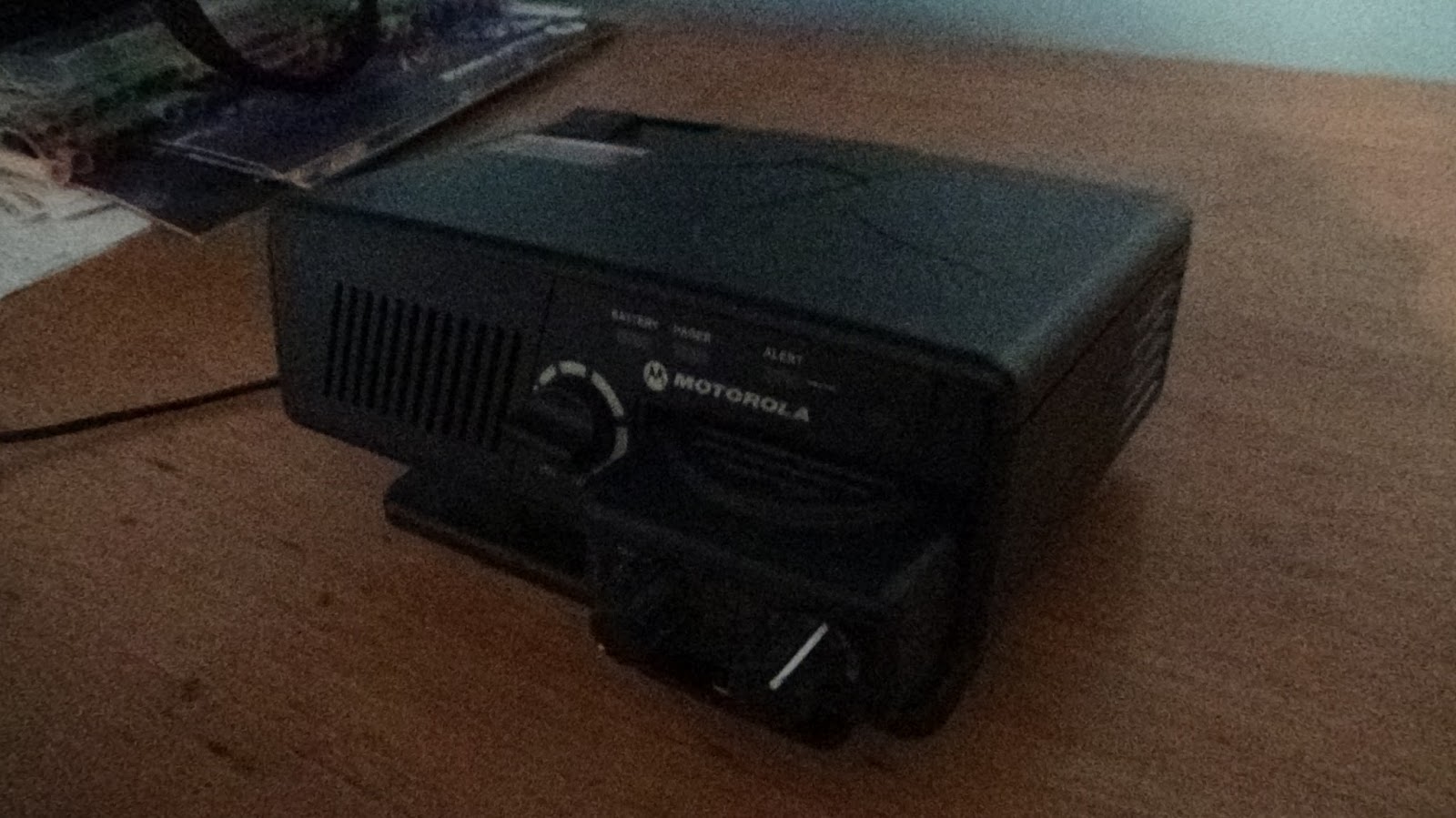
Here, I'll give you a basic run-through of how the pager works. It's pretty simple. When it needs charging you stick it into the console here (which works as a charger and speaker). The big knob to the left to the pager itself adjusts the volume.
- See that knob on the far right? That's both the on-off switch and the volume dial. Turn clockwise till it clicks, then it's on and from there you adjust the volume. Turn it backwards to lower the volume till it clicks again, and it's turned off.
- The other knob on the pager has four settings, lettered A through D. Here's what they're for;
- A- This is the setting it's often best to have it on (unless you're at the movies or something). It'll be quiet up until you get a call/dispatch. Then it's gonna beep a few times and then give you the info on what the emergency is. Good thing I'll still get the text messages on my phone, 'cause then I can be 100% sure that I get the street names right and all.
- B- This setting is where you just hear the dispatcher talking.
- C- "'C' for 'Chatter'." That's how I remember it. When it's set on C, then I can hear "just about everything"; dispatchers, people using radios from the fire engines and squad trucks, etcetera. What my lieutenant tells me he usually does is have it on A till he gets the beep/call, then switch it to C so he'll get more information. That way he can hear someone else on their radio talking about whether or not it was a false alarm or if the emergency call just got recalled (for example).
- D- Same function as the A setting, only it vibrates instead of beeping (much better for when you're at the movies lol)
Now when I tried turning it on to listen at home, over the next week after receiving this first pager me and the guys realized it wasn't working. It was shot, as they put it. So eventually I may end up getting a new pager, but till then I'll keep using my phone's emergency texts and see how often I'm even able to go help out.
(Now this is something that may come in handy if I wind up helping carry hoses... minus the "children and wife" part lol)
FIREMAN'S PRAYER:
"When I am called to duty God, wherever flames may rage, give me strength to save some life, whatever its age. Help me embrace a little child before it is too late or save an older person from the horror of that fate. Enable me to be alert and hear the weakest shout and quickly and effectively to put the fire out. I want to fill my calling and give the best in me, to guard my every neighbor and protect his property and if according to your will, I have to lose my life, please bless with your protecting hand my children and my wife. Amen."
Wednesday, December 7, 2016
Day in the life of the Twin Valley Fire Dept.
This is how Thursday nights usually go for me;
- First, I leave home around 6:30 so I can make it to Station 69 at roughly 7pm. These days, now that I've got a "bug-out bag" prepared, I can gear up with a reflector vest, cold-weather layers and flashlights, if there happens to be an emergency call while I'm over there.
- But since it's relatively quiet around the station at first with a few people hanging around, I'll automatically go into the lounge where we have a kitchen and living room setup. First thing I check is the coffeemaker and make sure there's a full, and HOT, pot. If not, I just make a fresh one. (Not sure why I get so much enjoyment out of making the new pot myself, but I just do).
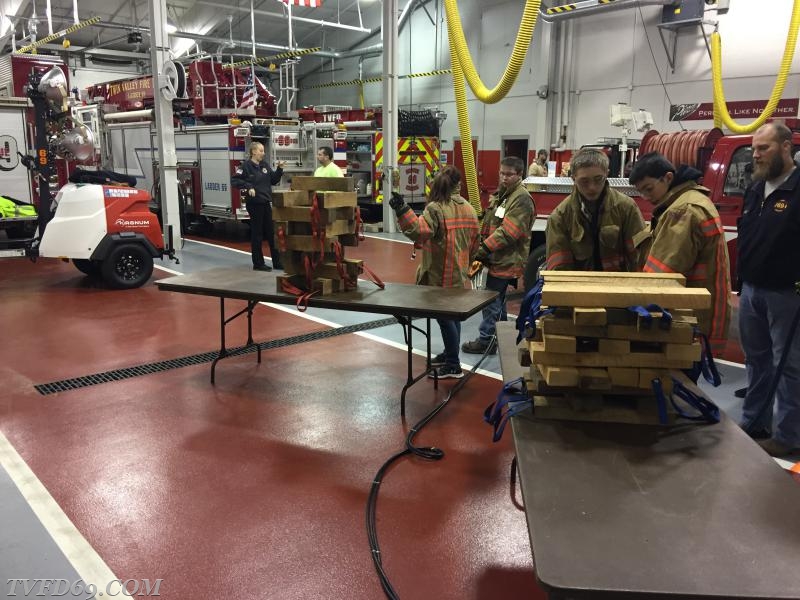
- With the living room setup is a pool table, and most of the time my friends Cody (11, not old enough to be a Junior) and Jack (he's about 16) will be hanging around and I'll invite one or both of them to a game of pool. That kind of laid back routine will usually go on until we're needed for helping with some chore or a review type of class; Fire Hydrant Basics was one such example, where a guy brought in a hydrant and explained to us all how it works.
A typical evening chore for us involves hosing down the engines and squad trucks, followed by using squeegees to get all the leftover water into the long grates that run across the floor. So whenever I go in, it's just about always safe to assume we'll be rinsing something down tonight. At least we're doing huge fire engines (which automatically makes it awesome, along with the fact you're doing it with talkative and interesting people). It's pretty fun climbing around on them to reach the tall areas with the sponges and rags.
- If we've gotten the chore done, especially the kind that requires teamwork (the kind that us kids help out with and not just leave to the grownups), then a lot of us may head back into the lounge or hang around in the big garage we were just swabbing. Of course I can hardly ever resist a good game of pool, so that's a given. Between 9 and 9:30 it's usually me and Jack at the pool table with maybe a few adults chatting in the kitchen area. Past 9:30 both of us boys usually just head out.
Also a couple weeks before that, me and my friend Jack made up a new game for the pool table called King of Clubs; you hit the white ball back and forth with the thick end of the pool queue, and use the Solitaire card sequence to keep score. Hit the corner pockets to gain a point/card, and you lose one if you land in the middle pockets. First to King wins.
It's a pretty diverse group of people; different age range and attitudes around the workplace.
(sorry ladies but those sexy/shirtless fireman calendars are lyin' to ya! lol)
It definitely keeps things interesting, I'll say that. For example the three boys who I typically play pool with are sixteen, eleven, and six. The Junior firefighters are between fourteen and eighteen (the younger kids usually have parents and/or siblings who work here, and hope to be Junior Firefighters when they're old enough). Then there's most of the adults being in their forties or fifties.
Plus how could I forget Mudge the dog???? I can never remember just who owns the dog, but still he's kinda like the mascot around here. Doesn't feel that long ago he was a small jumpy puppy. Now he's getting bigger, and he's barely any less active and/or attention-seeking.
I'm waiting for the day someone brings a Dalmatian...
I've only gotten the chance to respond and come to the scene of a fire once. But still I keep my eyes peeled for the chance to help out. As a fire police officer I won't charging into burning buildings, but I'll be helping keep security around it and directing traffic; making sure people don't get too close to it, and helping watch the firefighters' backs while they're looking forward.
I've considered taking the firefighting course(s) as well, but I figure I'll wait and see how this fire police stuff goes now that I've been recently sworn in and added as an official member. It'd be better to do the additional stuff at a time when I don't have a pile of homework anyway. I'll probably wait till May (after learning more) to try my hand at firefighting, if I'm still interested. Let's see how I like being out on the road first, then go from there.
For me, this is how the routine works (especially since I'm still pretty new to the process and have to learn). I get a text message on my phone saying what the emergency is, and where it is. "Fire alarm," or "brush fire" or "car crash" etc. Then I have to call my captain and ask him if I can come learn the ropes and help out. If it gets cancelled 'cause it's just a false alarm or that it can get wrapped up in a couple minutes, I won't end up going. But if it's big enough where it'll take a while to put out and may need more team members' help, then I'll get a "yes." So from there I stick with him for guidance, and watch what he and the other guys are doing.
I just recently got a pager that I can listen to and get more information from, so I'm hoping it makes a difference with the way I'm able to respond and learn.
I may not be directing cars with a wand myself, but I'd be right there in the road with them and getting some hands-on experience. If there's one thing these guys put emphasis on, it's that they don't want you out on a scene unless you feel ready. They really want you to get comfortable with how things work before you dive in.
Ok I should probably conclude this entry 'cause otherwise it'll be WAY too long. But I bet it won't be too long before I come up with more words and more pictures so... yeah. I'll be in touch!
Subscribe to:
Posts (Atom)